
Treatment / Conditions / Spondylolisthesis

SPONDYLOLISTHESIS

Spondylolisthesis and Spinal Instability.

A vertebra that has slipped forward over the one below it. One of the most common causes of low back pain and leg symptoms in adults. Niceville, Florida.

Spondylolisthesis occurs when one vertebra slips forward relative to the vertebra below it, causing instability, nerve compression, and pain that often radiates into the legs.

OVERVIEW

What is spondylolisthesis?

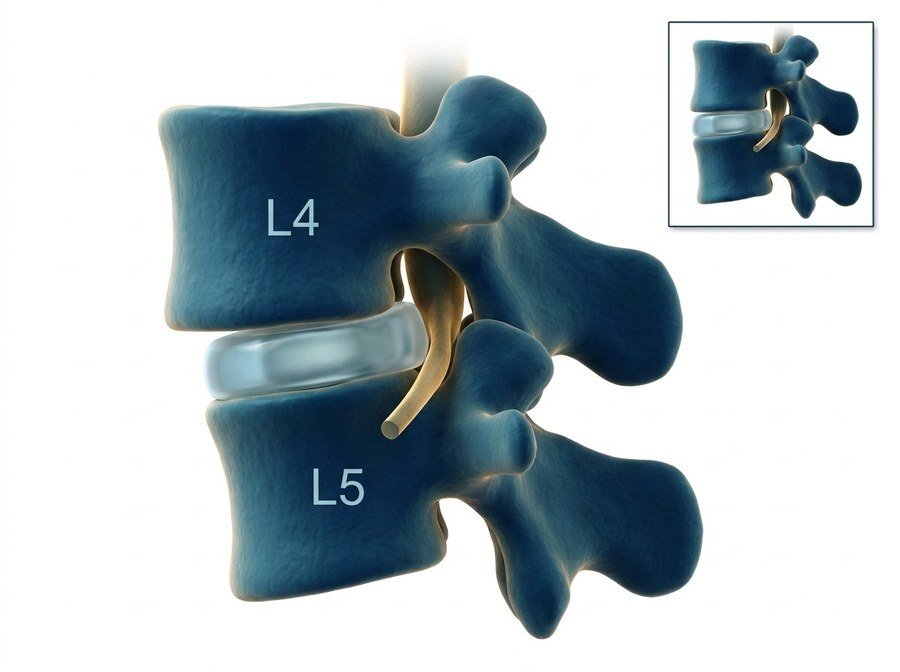
Spondylolisthesis is a condition in which one vertebra slips forward over the vertebra below it. The term comes from the Greek words for vertebra and sliding. It can occur at any level of the spine but is most common in the lumbar region at L4-L5 and L5-S1.

The severity is graded from I to IV based on the percentage of slippage. Grade I and II slips are the most common and can often be managed conservatively. Grade III and IV slips — where the vertebra has moved more than 50% of its width — typically require surgical stabilization.

Dr. Enguidanos is a fellowship-trained spine surgeon treating spondylolisthesis at HCA Florida Twin Cities Hospital in Niceville, Florida. He evaluates every patient individually to determine whether the slip is stable or progressive, and whether conservative care or surgery is the appropriate treatment.
SYMPTOMS

Common symptoms.

  • Low back pain that is worse with standing, walking, or extending the spine
  • Pain that improves with sitting or flexing forward
  • Radiating pain, numbness, or tingling into the buttocks and legs
  • Leg weakness or heaviness with walking — neurogenic claudication
  • Tight hamstrings — a compensatory response to the pelvic tilt from spondylolisthesis
  • A visible step-off deformity in the lower back in high-grade slips
  • Loss of lumbar lordosis — the lower back appears flat
  • Bowel or bladder symptoms in high-grade or acute slips — requires urgent evaluation
CAUSES AND RISK FACTORS

What causes it.

  • Isthmic — a stress fracture in the pars interarticularis, common in young athletes
  • Degenerative — facet joint and disc degeneration allowing progressive slippage in adults
  • Congenital — abnormal vertebral formation increasing susceptibility to slippage
  • Traumatic — acute fracture allowing vertebral displacement
  • Pathological — bone disease or tumor weakening the posterior elements
  • Post-surgical — disruption of posterior stabilizing structures during prior surgery
WHEN TO SEEK CARE

When to call us.

Seek evaluation when back pain is accompanied by leg symptoms, when symptoms are progressive despite conservative treatment, when imaging shows a Grade II or higher slip, or when neurological symptoms — weakness, numbness, or bowel and bladder changes — are present.
Not all spondylolisthesis requires surgery. A Grade I stable degenerative slip in an otherwise healthy adult may be managed with physical therapy, core strengthening, and activity modification for years. The decision to operate is based on symptom severity, slip grade, and whether the slip is stable or progressing.
Quick Facts
Years in practice
0 K+
Procedures performed
0 H
Procedures performed
0 +
DR. ENGUIDANOS'S APPROACH

Stable slips can be managed. Progressive slips require stabilization.

Stability Assessment

The key question with spondylolisthesis is whether the slip is stable or progressing. Dynamic flexion-extension X-rays assess motion at the affected level and guide the treatment decision.

Conservative Care

Physical therapy focusing on core stabilization, hamstring flexibility, and lumbar extension strengthening is the first-line treatment for most Grade I and II slips.

Surgical Decompression

When neurological symptoms are present from nerve root compression at the slipped level, decompression relieves pressure on the affected nerves.

Fusion for Stability

When the slip is progressive, symptomatic, or accompanied by instability, fusion stabilizes the affected level and prevents further slippage. Dr. Enguidanos uses minimally invasive techniques where appropriate.
SURGICAL OPTIONS

How Dr. Enguidanos treats it.

The appropriate procedure depends on the severity of your condition, your health, and your goals. Dr. Enguidanos evaluates every patient individually.
FUSION

Posterior Spinal Fusion

Pedicle screw instrumentation fuses the slipped vertebra to the one below it, eliminating instability and preventing further progression.
MINIMALLY INVASIVE

Laminectomy

Decompression of nerve roots compressed by the forward slip. Often combined with fusion when instability is present.
FUSION

Minimally Invasive Fusion

Fusion performed through small incisions using tubular retractors, reducing muscle disruption and allowing faster recovery than open techniques.
RECOVERY

What to expect after surgery.

1-2 Days

Hospital Stay

Most fusion procedures for spondylolisthesis require a one to two day hospital stay.
2-4 Weeks

Early Recovery

Walking is encouraged immediately. Light activity resumes within two to four weeks depending on the extent of surgery.
3 Months

Return to Activity

Most daily activities resume by three months. Physical therapy reinforces core strength and supports fusion maturation.
12 Months

Full Recovery

Fusion is confirmed on imaging at one year. Most patients achieve their final outcome well before this milestone.
PATIENT STORY

★★★★★

"My Grade III slip had been managed with pain medications for three years. Dr. Enguidanos performed a minimally invasive fusion and I was walking without a limp for the first time in years within six weeks."

KAREN D.

Minimally Invasive L4-L5 Fusion | Fort Walton Beach, Florida

Ready to discuss your spine?

Book a Consultation

DR. STEPHEN T. ENGUIDANOS MD | SPINE SURGERY | NICEVILLE, FL

Your information is private and will never be shared.

Request a Consultation

DR. STEPHEN T. ENGUIDANOS MD | SPINE SURGERY | NICEVILLE, FL

Your information is private and will never be shared.