
Treatment / Conditions / Congenital Spine Conditions

CONGENITAL SPINE CONDITIONS

Congenital Spinal Malformation.

Structural abnormalities of the spine present from birth. Hemivertebrae, congenital scoliosis, and complex deformities requiring specialized surgical expertise. Niceville, Florida.

Congenital spinal malformations are structural abnormalities that develop before birth. Early evaluation and well-timed treatment give children the best chance at a straight, balanced spine.

OVERVIEW

What are congenital spine conditions?

Congenital spinal conditions are structural abnormalities of the spine that develop during fetal formation, typically in the first six weeks of pregnancy. Unlike idiopathic scoliosis — which develops during adolescence for unknown reasons — congenital spine deformities are caused by abnormal vertebral formation or segmentation.
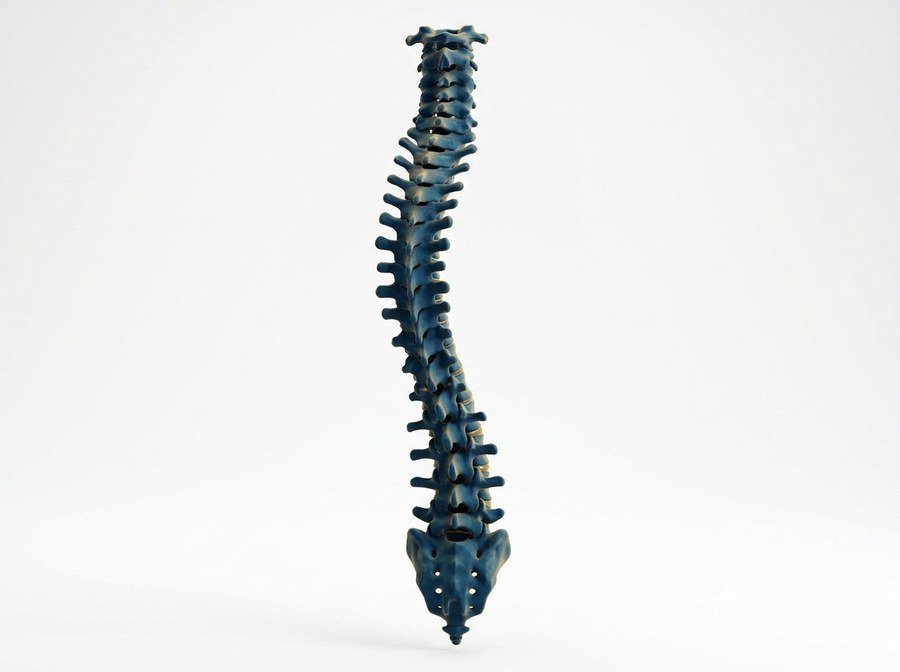
The most common types include hemivertebrae — where a single vertebra forms incompletely on one side, causing a wedge-shaped vertebra that drives a scoliotic curve. Block vertebrae and unilateral unsegmented bars are also common, where vertebrae fail to separate normally, causing rigid curves that worsen predictably with growth.
Dr. Enguidanos has extensive experience treating congenital spinal conditions in both children and adults. His fellowship training at the University of Colorado Spine Center under Dr. Thomas Lowe included pediatric deformity cases. He serves families throughout the Florida Panhandle and Gulf Coast at HCA Florida Twin Cities Hospital in Niceville, Florida.
SYMPTOMS

Common symptoms.

  • Visible spinal curve or uneven shoulder and hip height noticed in infancy or childhood
  • Rib or chest asymmetry
  • Torticollis — tilting of the head and neck in cervical congenital conditions
  • Progressive deformity with growth — often accelerating during growth spurts
  • Back pain in older children and adults with uncorrected deformity
  • Neurological symptoms if the spinal cord is involved — weakness, bowel or bladder changes
  • Associated anomalies — congenital heart defects, kidney abnormalities, and Sprengel’s deformity
  • Short trunk height disproportionate to arm length in severe cases
CAUSES AND RISK FACTORS

What causes it.

  • Failure of vertebral formation — hemivertebrae, wedge vertebrae
  • Failure of vertebral segmentation — block vertebrae, unsegmented bars
  • Mixed defects — combination of formation and segmentation failures
  • Genetic syndromes — Klippel-Feil, VACTERL association, Jarcho-Levin
  • Environmental factors during fetal development — not well characterized
  • Maternal factors — diabetes, valproic acid exposure during pregnancy
WHEN TO SEEK CARE

When to call us.

Any child identified as having a congenital spinal anomaly on imaging — whether found during prenatal evaluation, newborn screening, or incidentally — should be evaluated by a spine specialist. The timing of intervention is critical and depends on the type of anomaly, the expected rate of progression, and the child’s age.

Some congenital anomalies are balanced and require only observation. Others — particularly unilateral unsegmented bars opposite a hemivertebra — progress rapidly and require early surgical intervention before severe deformity develops.

Adults with untreated or partially treated congenital scoliosis who are experiencing progression or pain also warrant evaluation. Dr. Enguidanos sees both pediatric and adult patients with congenital spine conditions.
Quick Facts
Years in practice
0 K+
Procedures performed
0 H
Procedures performed
0 +
DR. ENGUIDANOS'S APPROACH

Timing is everything in congenital spine surgery.

MRI to Assess the Cord

All congenital spine patients require MRI evaluation to identify intraspinal anomalies — tethered cord, syrinx, diastematomyelia — that must be addressed before or concurrent with spinal correction.

Growth Monitoring

Many congenital curves are observed with serial imaging during childhood. The rate of progression guides the timing of intervention — some curves can wait, others cannot.

Early Fusion for High-Risk Anomalies

Unilateral unsegmented bars opposite a hemivertebra are among the most aggressive curves in all of spine surgery. Early short-segment fusion prevents severe deformity.

Hemivertebra Resection

For isolated hemivertebrae causing progressive curves, Dr. Enguidanos performs hemivertebra resection and short fusion — removing the abnormal vertebra and correcting the deformity at its source.
SURGICAL OPTIONS

How Dr. Enguidanos treats it.

The appropriate procedure depends on the severity of your condition, your health, and your goals. Dr. Enguidanos evaluates every patient individually.
DEFORMITY

Posterior Spinal Fusion

Fusion of the affected spinal segments to stop deformity progression and correct existing curve. The timing and extent depends on the child’s age and the type of anomaly.
DEFORMITY

Hemivertebra Resection

Complete removal of the abnormal wedge vertebra causing the congenital curve, combined with short-segment fusion to correct and stabilize the spine.
DEFORMITY

Osteotomy

For rigid or severe congenital deformities in older children and adults, osteotomies allow correction of deformity that cannot be achieved with instrumentation alone.
RECOVERY

What to expect after surgery.

3-5 Days

Hospital Stay

Pediatric deformity surgery requires close postoperative monitoring. Hospital stays of three to five days are typical for major congenital corrections.
4-6 Weeks

Activity Restrictions

Activity is restricted initially. Younger children recover faster than adults. Brace use may be recommended depending on the procedure.
3-6 Months

Return to Activity

Most children return to full activity including sports within six months of surgery.
Ongoing

Growth Monitoring

Children who have had spinal fusion are monitored throughout their growth to assess the behavior of unfused segments adjacent to the fusion.
PATIENT STORY

★★★★★

"Our daughter was diagnosed with a hemivertebra at six months old. Dr. Enguidanos monitored her through early childhood and performed surgery at age four. She is now nine and her spine is straight. He is extraordinary."

JENNIFER AND MARK T.

Hemivertebra Resection | Niceville, Florida

Ready to discuss your spine?

Book a Consultation

DR. STEPHEN T. ENGUIDANOS MD | SPINE SURGERY | NICEVILLE, FL

Your information is private and will never be shared.

Request a Consultation

DR. STEPHEN T. ENGUIDANOS MD | SPINE SURGERY | NICEVILLE, FL

Your information is private and will never be shared.